
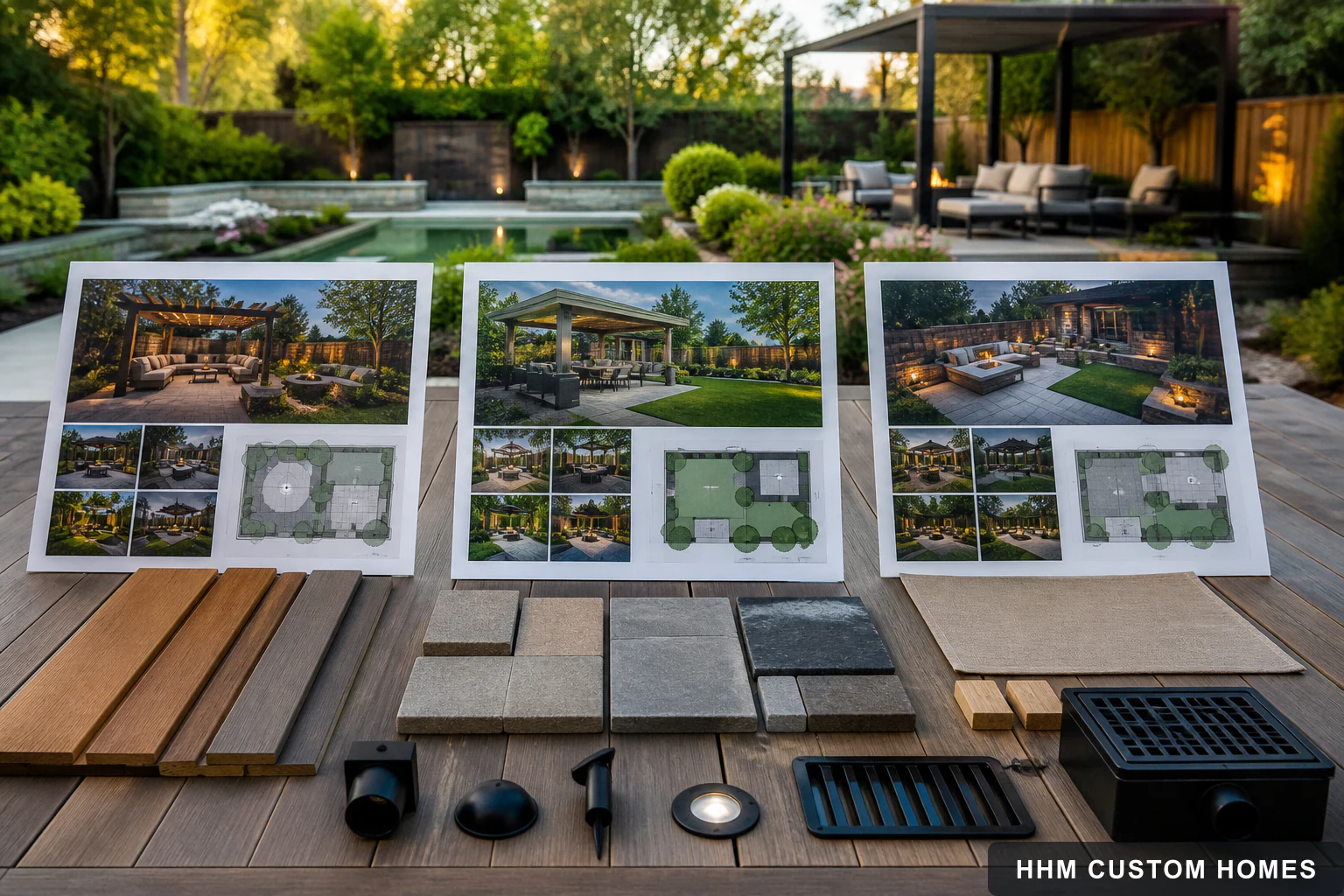
Outdoor-project proposals can show the same pergola, pavilion, shed, play structure, deck idea, or patio concept while describing very different installed scopes. A useful comparison starts with the property assumptions, responsible work, and exclusions—not the product image or lowest headline amount.
This guide is general consumer education, not a survey, design, technical review, legal interpretation, contractor recommendation, or determination that any product, installation, or price is suitable for a property.
Confirm the exact project basis
Identify the controlling plan, product model, component list, dimensions, finish, accessories, location, and proposal revision. Ask whether availability has been reconfirmed and how substitutions are handled. A retail product price is not a combined installed-project price.
Compare site and installation scope
Review survey or layout responsibility, site access, clearing, demolition, grading, drainage, foundation or anchoring basis, assembly, electrical work, delivery, unloading, staging, permits, inspections, cleanup, restoration, and owner responsibilities. If an item is excluded or assigned to another party, the agreement should say who verifies and coordinates it.
Read access and delivery assumptions
Compare ordinary delivery radius, vehicle class, crew, lifting or unloading equipment, route restrictions, gates, overhead conflicts, slope, ground conditions, storage, redelivery, weather, and protection. A destination-based delivery quote must reflect the address and current provider or fleet inputs rather than a universal retailer fee.
Review restrictions and unresolved conditions
Look for HOA review, setbacks, easements, utilities, flood conditions, septic or well areas, property lines, trees, retaining features, neighboring impacts, engineering, and correction of existing defects. Ask how discoveries and requested changes are documented before work proceeds.
Compare payment, warranty, and closeout
Review deposits, progress payments, financing treatment, cancellation terms, nonreturnable products, schedule assumptions, inspection dependencies, manufacturer warranty conditions, workmanship coverage, maintenance, punch-list steps, manuals, registrations, and final records.
If the proposals do not share the same property facts, product information, access conditions, priorities, decision roles, or budget boundaries, return to the outdoor-living consultation checklist before treating their totals as comparable.
After selecting a proposal, use an outdoor-project decision log to keep later selections, unresolved conditions, substitutions, and approved changes connected to the controlling scope.
Compare complete outdoor projects
HHM organizes the property, selected products, delivery route, unloading, site preparation, foundation or anchoring, installation, and approval requirements into one detailed Outdoor Living Plan. You can compare the complete installed scope—not disconnected line items.