
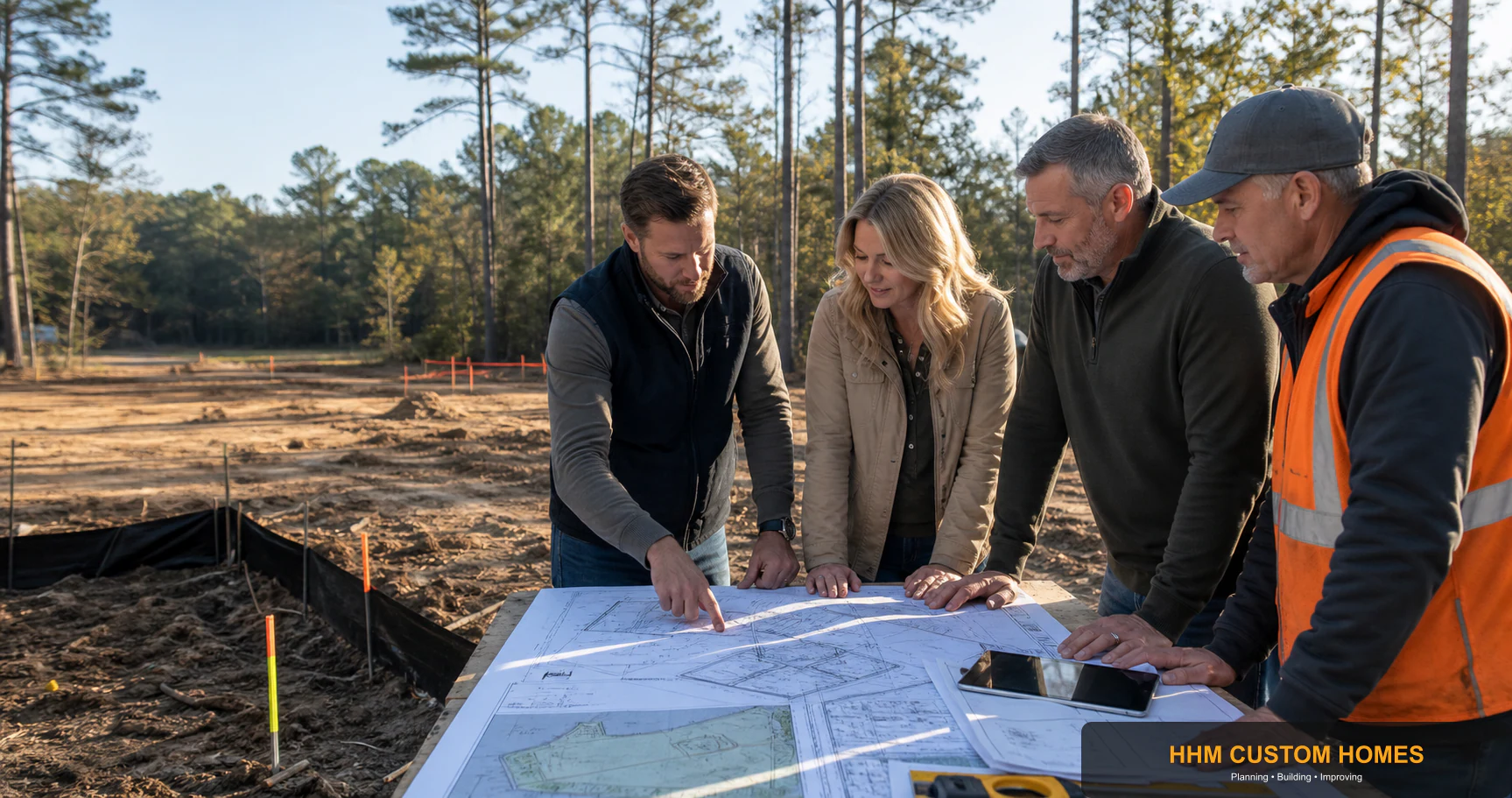
Mobilization should begin because the project is ready—not because a date appeared on an early schedule. A preconstruction readiness check brings the owner, builder, design team, engineers, key trades, lender, utilities, and jurisdictional requirements into one controlled record before site activity starts.
HHM establishes readiness from the current contract documents, written approvals, responsible-professional records, verified site conditions, and authority requirements. Mobilization is authorized only after the required controls are documented.
Freeze the correct document set
Identify the dated architectural, structural, civil, landscape, energy, and trade documents intended for construction. Record outstanding details, delegated designs, product substitutions, selections, and jurisdictional comments. A drawing marked “permit” or “pricing” should not silently become the field set.
Maintain one revision log showing who issued each document, when it was received, what it replaced, and who must act on it. Confirm that the contract scope, allowances, schedule assumptions, and drawings describe the same project.
Verify approvals without assuming them
Confirm the current permit and review status with the applicable authority and responsible project team. Include building and applicable trade permits, planning or zoning conditions, utility approvals, septic or well processes, floodplain or stormwater requirements, HOA or architectural review, and any other address- and scope-specific approvals.
Do not treat an application, fee payment, plan-review comment, or verbal conversation as a final approval. Record the issuing authority, document number, conditions, expiration or inspection requirements, and the person responsible for follow-up.
Coordinate the site before deliveries
Confirm boundaries and control points through the responsible survey process. Coordinate clearing limits, protected areas, access, staging, temporary utilities, sanitation, erosion controls, drainage, equipment routes, delivery turning space, overhead or underground conflicts, waste handling, and emergency access.
No informal site walk should place an owner in active equipment areas, unstable excavation, energized work, or other controlled construction zones. The builder’s safety and site-access plan governs entry.
Convert selections into procurement decisions
For each long-lead or sequence-critical item, record the approved product, model or performance basis, quantity, finish, responsible purchaser, required date, order status, storage plan, and substitution process. Confirm that selected equipment and assemblies remain coordinated with structure, enclosure, electrical capacity, plumbing, mechanical design, clearances, and manufacturer instructions.
A selection is not complete merely because an inspiration photo or showroom label was chosen. The project record should show the exact decision and its documented effect on cost, schedule, design, and installation responsibility.
Confirm financial and contractual readiness
Before mobilization, HHM confirms the executed agreement, current scope and exhibits, financing or cash-flow requirements, insurance, payment process, allowances, change-order procedure, owner-purchased items, and required customer notices. The project agreement establishes its effective date, deposit requirements, and authorization milestones.
Hold a go/no-go meeting
- Are the current construction documents identified and coordinated?
- Are required approvals documented, with unresolved conditions assigned?
- Are survey control, access, utilities, erosion measures, staging, and safety ready?
- Are long-lead selections released on a schedule supported by the project?
- Do contract, financing, insurance, and payment records support mobilization?
- Does every open risk have an owner, next action, and decision date?
If a critical answer is no, document the hold and resolve it before the affected work begins. A planned delay is easier to manage than unapproved field improvisation.
Once the project is ready to mobilize, use the custom-home construction checkpoints and closeout guide to organize the documented decision points that continue through construction.
Authoritative references
- North Carolina OSFM: Codes—Current and Past
- South Carolina Building Codes Council: Building Code Adoption
Sources rechecked August 21, 2026. Local administrative, permit, inspection, utility, and site requirements must be verified for the address and scope.