
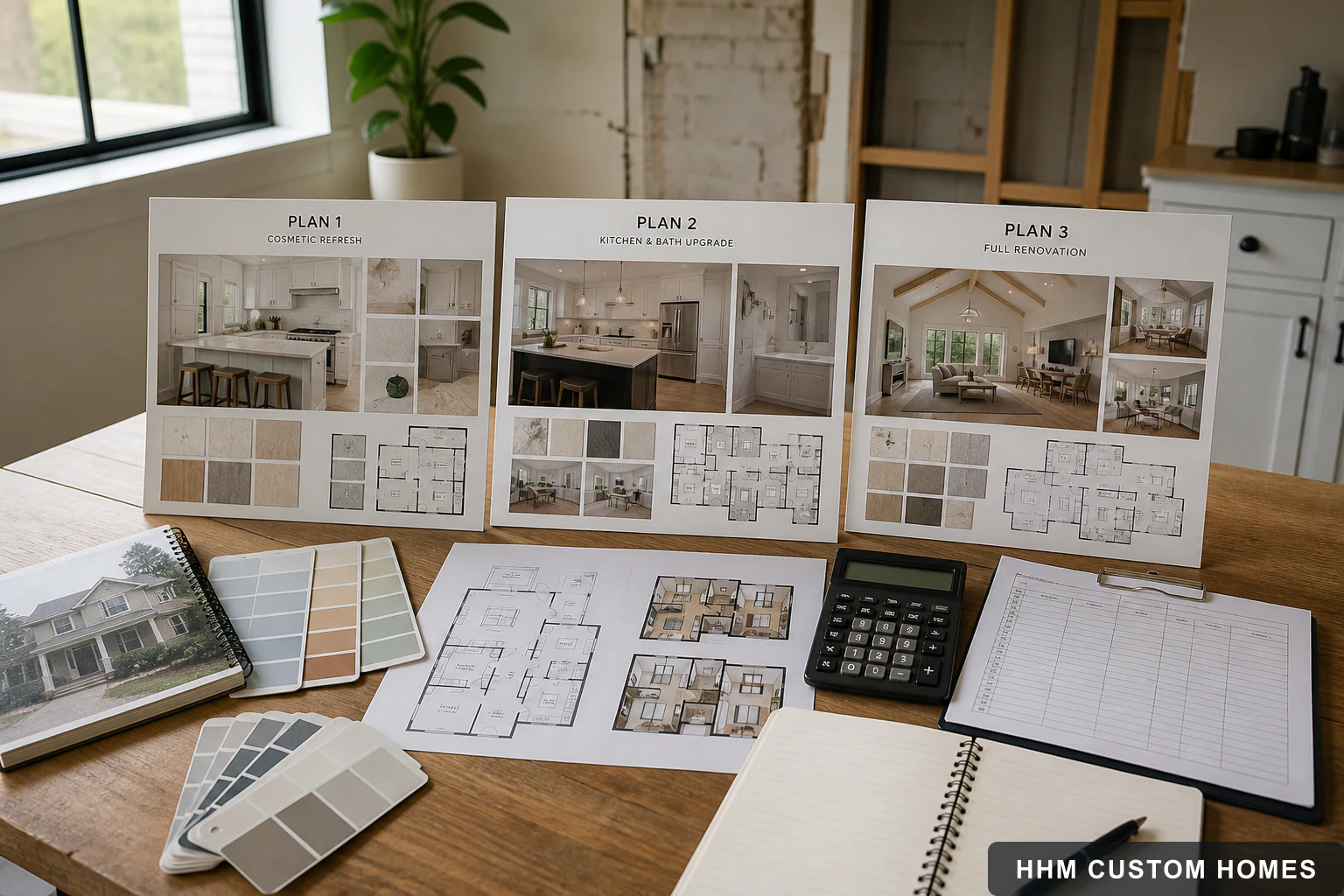
A single return figure can hide the assumptions most likely to change. A responsible comparison keeps property evidence, renovation scope, operating inputs, financing, timing, and uncertainty visible so the user can see what would need to be true for each scenario.
If the scenarios expose missing records, condition information, operating assumptions, renovation questions, financing boundaries, or decision criteria, return to the investment-property project review checklist and update the property record before relying on the comparison.
This guide is educational only. It is not an appraisal, inspection, construction estimate, financing offer, legal or tax advice, securities communication, forecast, or recommendation to invest.
Define distinct scenarios
Examples might include maintaining the property, completing a limited repair scope, completing a broader renovation, or delaying the decision for more evidence. Each scenario should identify its purpose and decision boundary instead of merely changing a percentage in the same spreadsheet.
Keep property facts separate
Record the source and date for ownership or listing information, property configuration, condition reports, zoning or use records, taxes, insurance, leases, rent information, and market evidence. Conflicts and missing data should remain open questions. Automated data can support research but should not be presented as verified truth without its source.
Use a complete project scope
Renovation assumptions should distinguish design and preconstruction, permits, demolition, repairs, systems, finishes, delivery, site conditions, protection, cleanup, professional services, contingency, and owner responsibilities. A cost per square foot or retail product total does not establish an HHM scope or contract price.
Show operating and transaction assumptions
Identify vacancy, maintenance, management, utilities, taxes, insurance, financing, lender costs, holding time, leasing costs, sale costs, and reserves that apply to each scenario. Use explicit source dates and avoid treating an advertised rate, estimated rent, or future sale value as guaranteed.
Stress the uncertain inputs
Test what happens if scope expands, approvals take longer, product availability changes, financing costs differ, occupancy is delayed, rent is lower, or disposition takes longer. Sensitivity analysis reveals dependence on assumptions; it does not predict the result.
Use decision gates
End each scenario with the inspection, appraisal, title, survey, zoning, insurance, lender, attorney, accountant, management, engineering, or contractor evidence required before proceeding. HHM’s role should be clear where renovation and project planning are involved.
Review the HHM Scout sample property review to see how property evidence, renovation assumptions, risks, and next actions can be organized into a more complete report.
Turn the scenario into a complete HHM Scout Property Report
HHM Scout connects the property research, comparable-market evidence, renovation scope, operating assumptions, risk flags, scenario analysis, and next action plan in one professional report.