
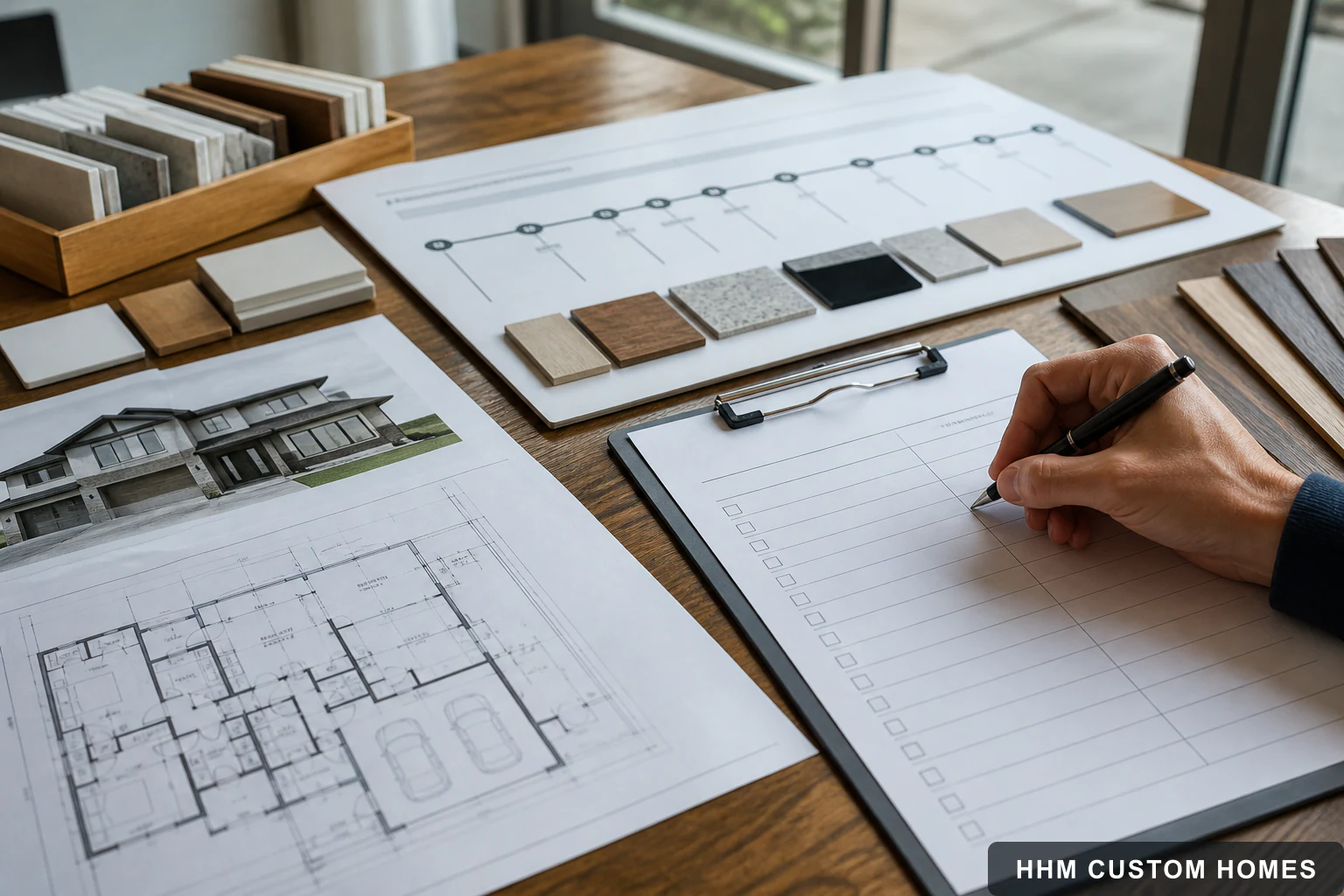
A custom home produces hundreds of connected decisions. A selection that appears cosmetic can affect framing, utilities, clearances, lead times, inspections, installation, warranties, or several other selections. A decision log gives the owner and project team one dated record of what was decided, what remains open, and which documents control the work.
Start with a custom-home project brief so the decision log can track the household priorities, property questions, budget framework, and responsibilities established before design.
Use the custom-home design, permit, and construction roadmap to connect each required decision date to the site, design, pricing, approval, construction, inspection, or closeout step that depends on it.
The log supports communication; it does not replace signed contracts, approved drawings, specifications, change orders, permits, manufacturer instructions, or professional responsibilities.
Give every decision a unique record
Use a consistent identifier, short title, responsible person, date opened, required decision date, current status, and final approval date. Link the decision to the applicable room, drawing, specification, proposal, allowance, product, meeting note, or change document.
Statuses should be plain and limited, such as open, information needed, options issued, owner review, approved, superseded, or canceled. Avoid relying on memory, scattered text messages, or an unlabeled photograph.
Record the full effect—not just the selection
For each decision, identify known effects on cost, schedule, design, permits, procurement, delivery, storage, installation, adjacent work, maintenance, and warranty. If the effect has not been evaluated, say so. “Owner likes option B” is not the same as approval to purchase or install option B.
Keep confidential dealer pricing, account data, financial documents, passwords, and sensitive personal information out of general project comments. Store protected information only in the approved system and limit access to people who need it.
Connect allowances to exact selections
An allowance is a planning amount, not a complete product description. When a selection is approved, the log should identify the exact product or scope, quantity, included accessories, finish, delivery assumptions, installation responsibility, taxes or freight treatment, and the document that reconciles the allowance.
If the selection exceeds or falls below an allowance, follow the project’s written pricing and change process. Do not calculate the customer’s contractual adjustment from an informal retail comparison.
Use deadlines tied to project dependencies
A useful required-by date is connected to the real next step: drawing completion, engineering, permit submission, framing, rough-in, supplier order, finish work, or installation. The project schedule should show when late information could affect work, but the team must verify actual lead times and dependencies.
Flag long-lead or custom items early and reconfirm availability before relying on them. A website stock message is not a delivery commitment to the project.
Control revisions and superseded information
Never erase the history of a changed decision. Mark the earlier record superseded, link it to the replacement, and identify which drawings, schedules, purchase orders, or field instructions require revision. The current approved version should be easy to distinguish from alternatives and obsolete documents.
Before work proceeds, the responsible parties should confirm that the field team and affected suppliers received the controlling information. A decision made in a meeting is not implemented merely because it appears in meeting notes.
Review open decisions on a predictable rhythm
Use regular project reviews to sort decisions by urgency, dependency, responsible party, and risk. Close items only when the controlling approval or document exists. Keep a separate open-question list for items still awaiting site investigation, professional input, pricing, or jurisdiction response.
Organize the next planning decisions with HHM
HHM can help connect project goals, site questions, design information, selections, supplier inputs, and construction planning in one coordinated path. Final obligations remain governed by the accepted project documents.