
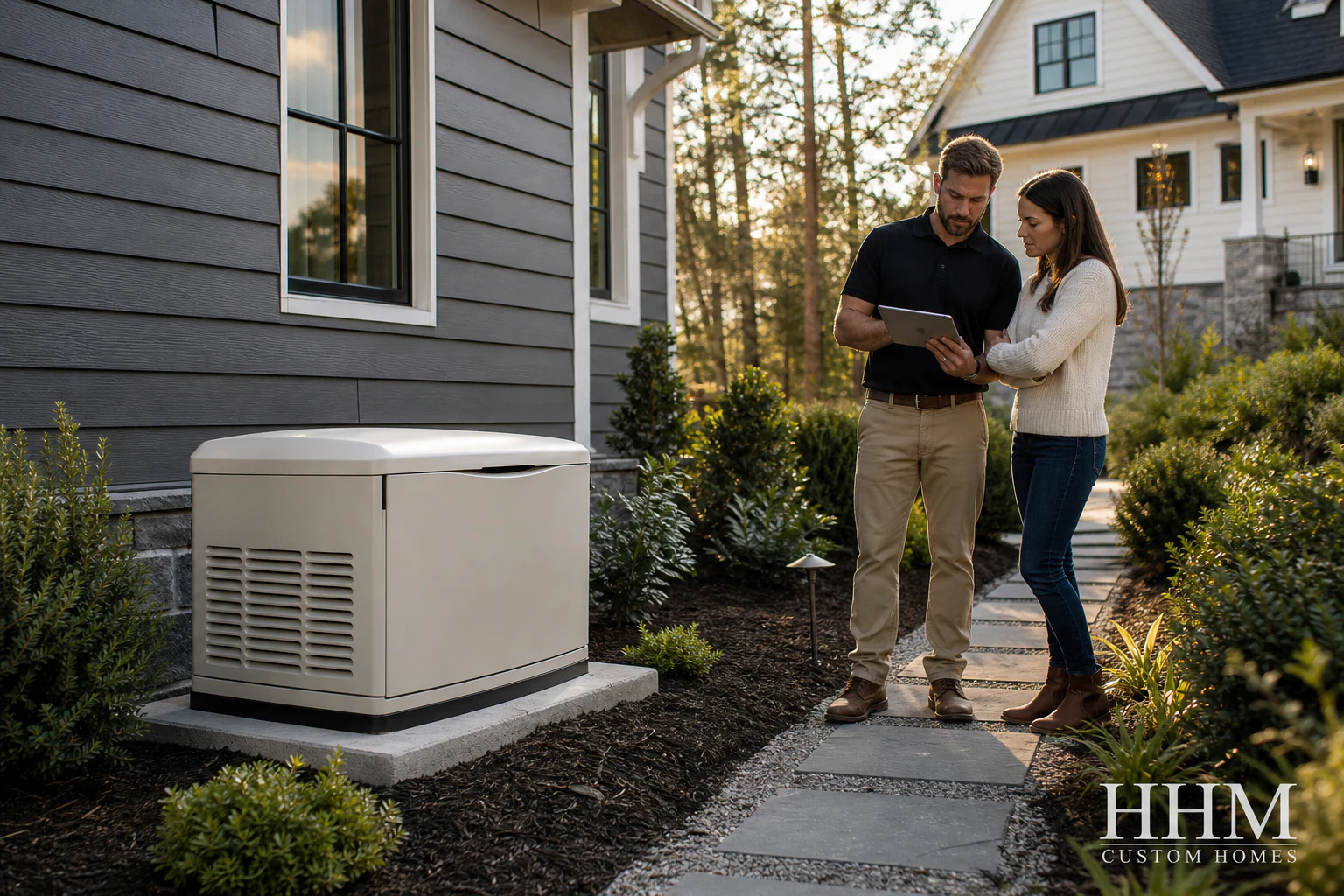
Planning a permanently installed standby generator in High Point starts with more than choosing equipment. The property address, electrical loads, fuel supply, transfer equipment, proposed location, permit documents, inspections, and final testing all affect the installed system. Organizing those items early helps homeowners compare complete proposals and avoid late changes.
This High Point guide focuses on the local planning sequence. It does not replace a load calculation, equipment instructions, permit review, utility requirements, or work by the qualified professionals responsible for the project.
Confirm the property and permitting jurisdiction
Begin with the exact street address. High Point provides thePOINT and Build High Point resources to help property owners and contractors confirm jurisdiction, zoning information, and the permit path. Do not assume that a High Point mailing address automatically determines which authority reviews the work.
The City of High Point identifies permanently installed generators as work requiring supplemental documentation. Its residential-generator supplement asks for the generator manufacturer, model and kilowatt rating; fuel type; transfer-switch type; and maximum BTU input. The form also states that a hard copy of the load calculation and the manufacturer’s installation instructions must be available at the inspection.
Size the system from documented loads
Square footage can support an early conversation, but it is not a final generator size. Start by listing the loads that must operate during an outage: refrigeration, well or sump pumps, heating and cooling, lighting, communications, security, medical equipment, cooking, water heating, garage access, and any home-office or business equipment.
Then identify which loads must run at the same time and which can be managed or sequenced. Motors and compressors can require more power while starting than while running. The final selection should follow a documented load calculation, selected-equipment data, the transfer strategy, fuel conditions, and the applicable electrical requirements.
For a broader explanation of this process, read HHM’s Carolina standby-generator sizing and site-planning guide.
Coordinate transfer equipment and electrical scope
A standby system needs a safe method of separating utility power from generator power and directing approved loads to the available source. The transfer equipment must fit the electrical service, approved load plan, conductor requirements, and selected generator. A generator-and-switch package should not be treated as automatically compatible with every home.
Duke Energy advises that stationary or standby generators be installed by a licensed electrician and warns against connecting a generator directly to a breaker panel, fuse box, or meter without the proper transfer arrangement. Electrical service work, transfer-switch installation, utility coordination, conductor selection, controls work, and energized testing belong in the permitted professional scope.
Verify fuel capacity before finalizing equipment
Natural gas and liquid propane create different planning questions. Confirm fuel availability, required capacity, pressure, regulator and piping needs, tank considerations, route length, access, and which party is responsible for each portion of the fuel work. The presence of another gas appliance does not establish that the existing system can support the generator.
High Point’s generator supplement requests the proposed fuel type and maximum BTU input because fuel planning and generator output must be coordinated. The installed proposal should identify the fuel scope, responsible trade, utility or supplier coordination, inspections, and any exclusions.
Choose the site around drainage, clearances, and service access
Evaluate grading, drainage, flood exposure, combustible construction, doors and windows, utility locations, exhaust direction, equipment access, service space, noise considerations, foundation or pad requirements, and the manufacturer’s current instructions. Generac’s installation guidance emphasizes a stable, well-drained location and describes site preparation, fuel connection, transfer-switch installation, and an operational test as parts of the installation process.
Before excavation, trenching, anchoring, or pad work begins, the responsible party should use the applicable NC 811 process and account for private lines that the public locate process may not mark. Final placement must follow the selected equipment, field conditions, approved documents, and the authority reviewing the address.
Plan permits and inspections before work begins
North Carolina OSFM has stated that generator installation requires applicable permits. High Point explains that electrical and gas work generally must be performed by appropriately licensed contractors responsible for obtaining the permits, subject to the specific owner-occupied exemption described by the city.
After a permit is issued, High Point lists the required inspections on the permit. The city states that final approval results in a certificate confirming that the completed work met the applicable state and local code requirements and the permit terms.
Compare complete installed proposals
A useful proposal should separate the equipment, transfer components, delivery, pad or foundation, electrical work, fuel work, permits, utility coordination, startup, testing, monitoring options, restoration, maintenance, exclusions, and conditions that could change the scope. It should also state who is responsible for each permit, inspection, trade, and closeout document.
Installed cost depends on the verified load, equipment, transfer strategy, electrical-service conditions, fuel route and capacity, placement, access, site work, permitting, and restoration. See HHM’s guide to standby-generator installation cost factors for the questions that make proposals easier to compare.
What to gather before a High Point site review
- The exact property address and utility provider
- A list of the loads that must operate during an outage
- Photos of the electrical service, proposed exterior locations, and existing fuel equipment
- Available equipment labels or model information
- Natural-gas or propane information, if available
- Access, drainage, noise, HOA, and landscaping concerns
- Questions about permits, inspections, schedule, maintenance, and financing
Authoritative sources
- City of High Point: Obtaining a Permit
- City of High Point: Residential Generator Supplement
- City of High Point: Scheduling Inspections
- City of High Point: Certificates
- North Carolina OSFM: Generator Permit Interpretation
- Duke Energy: Generator Safety Tips
- Generac: Backup Generator Installation
- NC 811
Sources reviewed August 30, 2026. Requirements remain property-, product-, utility-, and jurisdiction-specific; confirm current instructions and approvals for the project address.