
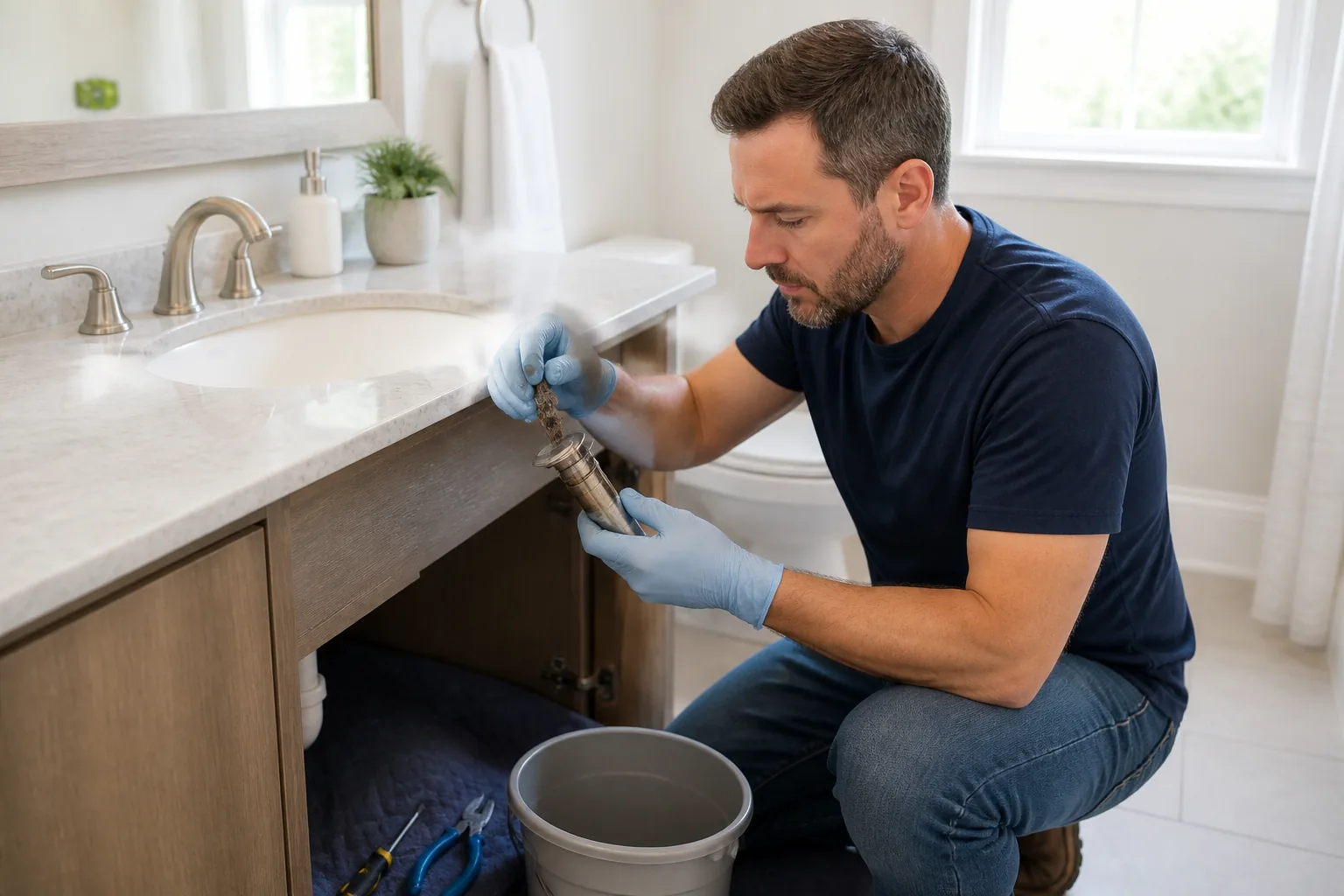
A bathroom sink that drains slowly often has hair, soap residue, or other debris around the stopper or immediately below it. Start with the least invasive step, test after each change, and stop if the drain assembly leaks or the blockage appears to be farther inside the plumbing.
Confirm that the problem is limited to one sink
Run nearby fixtures briefly. If a toilet, tub, or another sink also drains slowly, gurgles, or backs up, the restriction may be beyond the bathroom sink. Do not continue taking apart the vanity drain; protect the area from overflow and call a qualified plumbing professional.
If only this sink is slow, remove loose items from the vanity, photograph the existing drain and lift-rod connections, and close the faucet. A photograph makes reassembly easier and helps HHM or a plumber understand what was disturbed.
Clean the stopper first
Some stoppers lift or twist out from above. Others are retained by a pivot rod below the sink. Do not force a stopper that resists. For a pivot-rod assembly, mark or photograph the linkage position, place the bucket underneath, loosen the retaining nut carefully, withdraw the pivot rod, and lift out the stopper. Clean hair and residue from the stopper and the accessible opening without pushing debris deeper.
Inspect the stopper seal, pivot ball, retaining nut, and visible drain body. Cracked parts, severe corrosion, movement at the sink connection, or water staining in the cabinet are reasons to stop and have the assembly evaluated rather than simply tightening harder.
Try a sink plunger when the stopper is clear
Reinstall or temporarily set aside the stopper as appropriate for the assembly. Block the overflow opening with a damp cloth, add enough water to cover the plunger cup, and use a sink plunger with controlled strokes. The goal is to move the obstruction—not to apply extreme force. Test the drain with a modest amount of water and watch every visible joint below the sink.
Open the trap only when it is accessible and sound
If the drain remains slow and the trap is an accessible, serviceable slip-joint assembly in good condition, a capable homeowner may place a bucket below it, photograph the nut positions, loosen the slip nuts by hand or with appropriate pliers, and lower the trap carefully. Expect standing water. Clean the removable trap without forcing tools into concealed piping, then reinstall the washers in their original orientation and tighten only enough to seal.
Run water gradually while watching the entire assembly. Dry each joint and check again for moisture. If a nut, washer, tube, or drain body is damaged, misaligned, glued, corroded, or will not seal, stop using the sink and arrange a qualified repair.
Avoid shortcuts that can create a larger problem
- Do not combine chemical products or use a product contrary to its label.
- Do not drive an improvised wire into concealed piping; it can lodge, scratch finishes, or damage components.
- Do not overtighten plastic or thin metal slip-joint nuts.
- Do not treat recurring clogs as normal. Repeated buildup, poor venting, damaged piping, or a restriction farther downstream needs diagnosis.
- Do not alter concealed supply, drainage, or vent piping as part of this simple maintenance task.
When HHM can help
A recurring slow sink can be part of a larger bathroom issue: an aging vanity, leaking drain body, damaged cabinet, poor access, moisture damage, or a remodel that needs coordinated plumbing and finish work. HHM can organize the address, photos, symptoms, desired outcome, and responsible trade review into a clear repair or bathroom-improvement scope.
Turn a recurring sink problem into a verified repair plan
Send HHM photos of the sink, stopper, visible piping, cabinet condition, and any related fixtures. HHM will review the intake and explain the next planning step; this is not a remote diagnosis or guaranteed price.
Sources checked August 23, 2026
- Lowe’s: How to Remove a Sink Drain Stopper — accessible stopper linkage, disassembly, cleaning, reassembly, and leak-check sequence.
- U.S. EPA WaterSense: Home Maintenance — prompt repair of plumbing leaks and fixture-maintenance context.
- North Carolina Office of State Fire Marshal: Codes — Current and Past — official code-status reference if the scope expands beyond simple maintenance.
- South Carolina Building Codes Council: Building Code Adoption — official code-adoption reference if the scope expands beyond simple maintenance.