
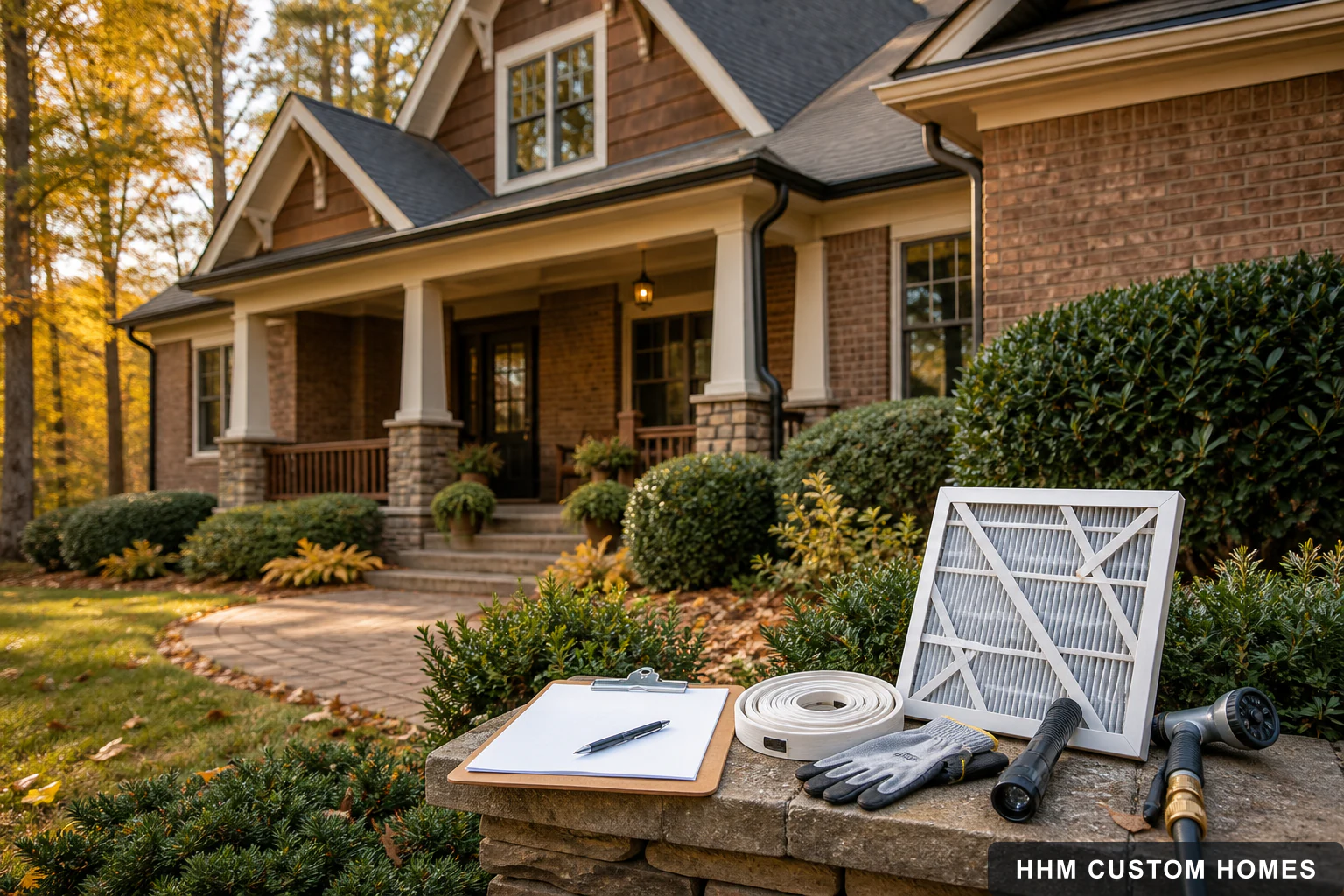
HHM uses seasonal maintenance to identify developing problems early, document changes, prioritize repairs, and protect the home as one coordinated system. A loose shingle, clogged gutter, or slow plumbing leak can become structural damage, mold, or a major repair when it is ignored.
The easiest way to stay ahead is to divide maintenance into seasonal tasks. You do not need to complete everything in one weekend. Walk around your property, make a short list, and prioritize anything involving water, electricity, fire safety, or structural movement.
North Carolina and South Carolina conditions vary from the coast and Lowcountry through the Piedmont and mountains. HHM adjusts the inspection schedule and priorities for the property’s temperature, humidity, storm exposure, elevation, equipment, manufacturer guidance, and local requirements.
If your checklist identifies recurring water intrusion, comfort issues, aging systems, storm damage, or a larger repair decision, start an HHM project review so the scope can be assessed around the actual property.
Spring: inspect and recover from winter
Spring is the right time to look for damage caused by freezing temperatures, storms, and trapped moisture.
- Inspect the roof from the ground. Look for missing, curled, cracked, or uneven shingles. Check flashing around chimneys and roof penetrations with binoculars if possible. Avoid climbing onto the roof.
- Clean gutters and downspouts. Remove leaves and debris, then confirm that water discharges to an appropriate location away from the foundation without causing erosion or affecting neighboring property. Suitable routing and distance depend on the site and local requirements.
- Check exterior drainage. Soil should generally slope away from the house. Note low areas where water collects after rain.
- Examine siding, trim, and caulk. Repair small gaps around windows and doors before wind-driven rain gets behind the exterior finish.
- Service cooling equipment. Replace or clean the HVAC filter, clear debris around the outdoor unit, and schedule professional service if cooling is weak, noisy, or uneven.
- Test outdoor faucets. Watch for leakage inside and outside after turning them on for the season.
Summer: protect comfort and exterior finishes
Long days make summer ideal for exterior work, but heat and humidity can put additional strain on cooling systems and building materials.
- Inspect decks, porches, and railings. Clean surfaces and note loose hardware, movement, splintering, decay, or corrosion. Do not treat a loose railing or structural connection as a cosmetic tightening task; restrict access and obtain qualified evaluation when stability or rot is uncertain.
- Look for pests and wood damage. Check crawl-space openings, roof edges, sheds, and areas where wood meets soil.
- Monitor indoor humidity. Persistent condensation or musty odors may indicate a moisture or ventilation problem.
- Check window and door operation. Clean tracks, inspect screens, and adjust sticking hardware before forcing it.
- Inspect plumbing below sinks. Feel supply connections and cabinet floors for moisture. A dry paper towel can reveal a very slow leak. Use the companion faucet-leak source guide.
- Review paint and protective coatings. Peeling paint and exposed wood allow moisture intrusion. Prepare surfaces properly before recoating.
- Prepare for severe weather. Confirm that drainage paths are open, secure or store loose exterior items, refresh household emergency supplies, photograph the property for insurance records, and review household communication and evacuation plans appropriate to local hazards.
Fall: prepare for cold and severe weather
Fall maintenance focuses on keeping water out, heat in, and essential systems ready for lower temperatures.
- Clean gutters again. Falling leaves can quickly block drainage even if gutters were cleaned in spring.
- Seal obvious air leaks. Inspect weatherstripping and exterior caulk around accessible doors and windows.
- Schedule heating-system service. Replace the filter and have fuel-burning equipment checked by a qualified technician.
- Protect exterior plumbing. Disconnect hoses and winterize outdoor faucets or irrigation systems as appropriate for your climate.
- Check the attic visually. From a safe access point, look for daylight, water staining, compressed insulation, or signs of pests. Do not disturb unknown insulation.
- Trim hazards thoughtfully. Remove small dead branches you can reach safely. Hire a qualified tree professional for large limbs or anything near power lines.
Winter: monitor safety and interior systems
Winter is a good time to inspect indoor systems and watch for problems that appear during cold weather.
- Test smoke and carbon-monoxide alarms. Winter is only one checklist checkpoint. Test alarms at the intervals specified by the manufacturer and applicable safety guidance; CPSC and the U.S. Fire Administration recommend monthly testing. Replace batteries and devices according to their instructions and service life.
- Watch for plumbing risks. Keep vulnerable areas warm and investigate reduced water flow, unexplained dampness, or frost on exposed pipes.
- Inspect fire extinguishers. Confirm they are accessible, undamaged, and within their indicated service life.
- Look for condensation and staining. Moisture around windows, ceilings, or bathroom walls can indicate ventilation, insulation, roofing, or plumbing concerns.
- Clean appliance vents and filters. Follow manufacturer guidance for range hoods, bathroom fans, refrigerators, and clothes dryers.
- Review your repair list. Winter is an excellent time to plan spring projects, request estimates, and order long-lead materials.
Keep a simple home maintenance record
Save inspection dates, photos, receipts, model numbers, paint colors, warranties, and contractor details in one digital folder. Photograph developing cracks or stains with a ruler or recognizable reference in the frame. Comparing dated photos is more reliable than relying on memory.
Prioritize water intrusion, electrical warning signs, gas odors, structural movement, and fire-safety issues. Cosmetic work can usually wait; active damage should not.
Small, dry cosmetic wall damage may be repairable after the underlying cause is identified and corrected. Leave deteriorated, contaminated, repeatedly wet, or pre-1978 painted surfaces for the appropriate qualified evaluation.
Turn the checklist into an HHM property plan
Upload photos and the project address, select the items found, and book an HHM site visit or Google Meet. HHM carries prior form answers into the appointment, organizes the findings by urgency and trade, and prepares the appropriate maintenance, repair, or improvement scope.