
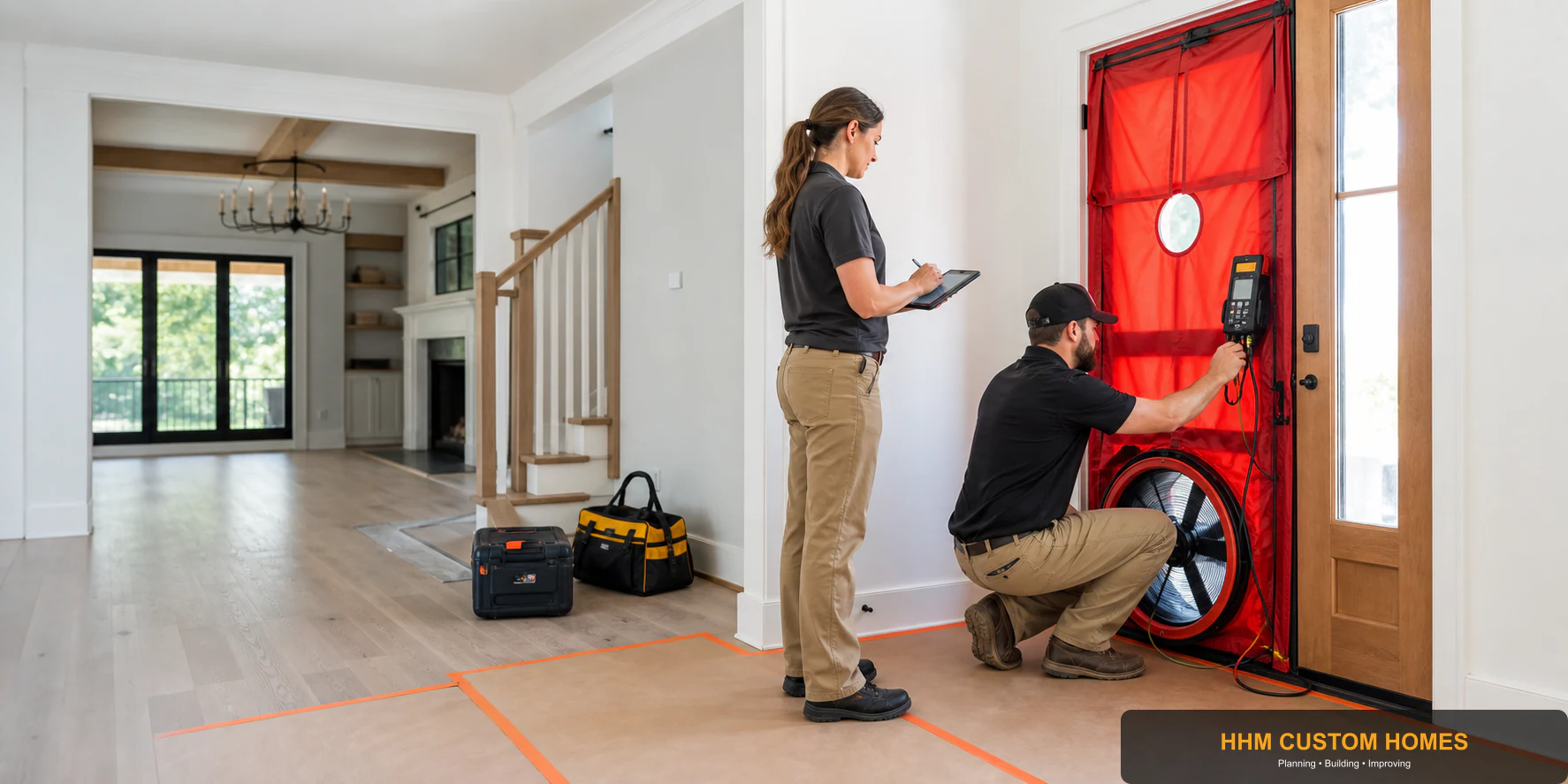
HHM verifies high-performance features through documented testing and commissioning rather than product labels or a final walkthrough alone. The project plan identifies each target, responsible party, method, timing, acceptance record, and correction path before affected work is concealed.
HHM defines the applicable testing protocol, certification path, energy rating, code inspection, commissioning record, and measured performance targets in the approved project scope.
Write the target before selecting the test
Define the owner’s goals and any actual program requirements first. Depending on the approved project scope, verification may address water-management observations, enclosure continuity, building airtightness, duct leakage, ventilation airflow, room airflow, equipment startup, controls, condensate, pressure relationships, electrical or backup-power functions, and owner training.
The adopted code, enrolled certification program, approved design, contract, selected products, and responsible professional establish the project-specific acceptance criteria.
Schedule checks before concealment
Some conditions can be corrected more effectively before drywall, insulation, roofing, cladding, cabinetry, or finishes conceal them. Build verification points into the schedule and identify which work must pause until the responsible review is documented.
HHM uses photographs alongside measurements, required inspections, testing, and professional evaluation. HHM’s responsible team collects evidence from controlled work zones and energized, pressurized, elevated, or unfinished systems.
Separate code inspection, quality control, and certification
An AHJ inspection, a builder quality-control review, an independent rating or test, and a voluntary certification serve different purposes. Passing one does not automatically establish the others. The project record should identify the role, scope, independence, credentials where applicable, and deliverable for each review.
ENERGY STAR and EPA Indoor AirPlus use defined program documents and verification requirements. HHM uses those names and labels only for projects that satisfy the applicable enrollment, verification, and brand requirements.
Create a correction loop
For each failed or incomplete check, record the condition, responsible reviewer, required response, corrective work, retest or reinspection, approval authority, and final close date. A verbal “looks good” should not replace the required record.
If testing identifies an active combustion, electrical, structural, moisture, contamination, or other safety concern, HHM stops the affected activity and routes it to the qualified responsible party.
Deliver a usable owner record
- Approved performance brief and enrolled-program documents, if any
- Final test, startup, balancing, inspection, and correction records included in scope
- Equipment, controls, filter, ventilation, condensate, shutoff, and alarm information
- Manuals, warranties, model and serial records, and responsible service contacts
- Owner demonstrations and a maintenance schedule
Closeout documents show what was checked within a defined scope; they do not eliminate maintenance, guarantee future conditions, or expand warranties beyond their written terms.
Authoritative references
- ENERGY STAR: Independent Inspections and Tests
- EPA Indoor AirPlus Program Documents
- North Carolina OSFM: Codes—Current and Past
- South Carolina Building Codes Council: Building Code Adoption
Sources checked August 15, 2026. Verify current program, AHJ, design, contract, and product requirements for the project before testing or public certification claims.