
Once a gazebo or pergola is installed, its most useful paperwork is not a brochure. It is the record that identifies the exact structure in your yard. That record helps a homeowner in North Carolina or South Carolina return to the correct instructions when a fastener, roof component, louver, bracket or wood member needs attention.
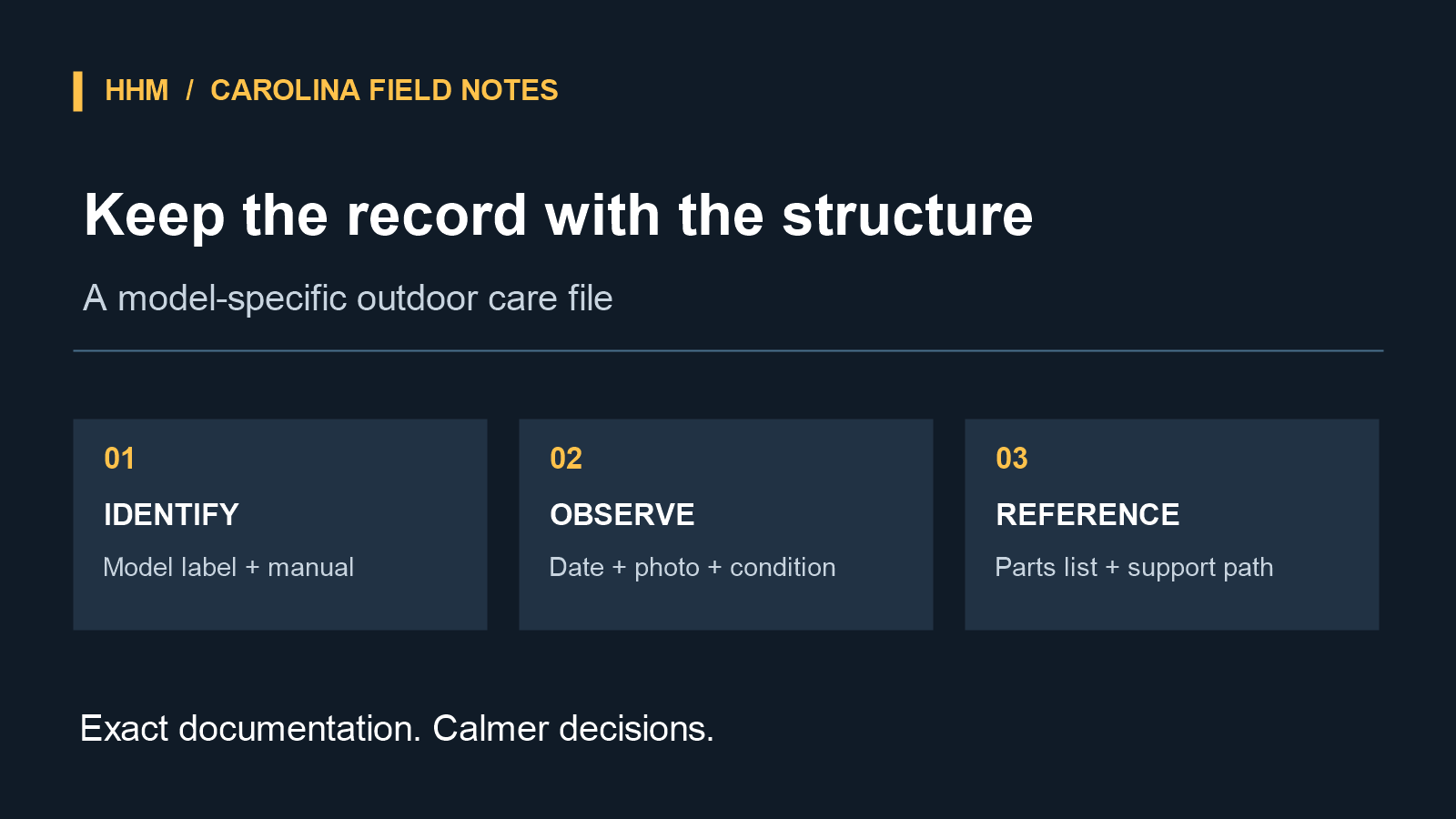
Keep a simple handoff file for an outdoor structure: the manufacturer, model number, manual revision or download link, parts-list pages, purchase and installation dates, installer contact, product ID or tracking label, and a few clear photos taken at completion. Put it where the household can find it. A brand name and rough size are not a substitute for the model-specific parts list. Backyard Discovery’s manuals tell owners to retain the manual for replacement-part needs, and its support library organizes manuals by individual product.
Start with the manual that matches the structure
Before tightening, sanding, sealing or replacing anything, find the manual for the exact model—not a similarly sized gazebo or a newer product page. Backyard Discovery’s current manual library includes both cedar pergolas and steel louvered pergolas, each with its own instructions. Its Arlington gazebo manual also asks callers seeking damaged or missing parts to have the model number plus the item description and number from that manual’s parts list. That is why a handoff file should preserve the parts-list pages, not just a link that may later be difficult to locate.
When an issue appears, photograph it from a safe position, note the part description/number exactly, and use the manufacturer’s support route with the model and record details. Do not assume a retailer carries the part, that a component remains available, or that a particular remedy, price, shipping time or warranty applies. Those are model- and circumstance-specific questions for the manufacturer.
Use recurring checks as observations, not a universal schedule
A handy seasonal walk-around can flag a change, but it does not replace the manual’s maintenance instructions or a professional assessment. From the ground or a stable accessible area, look for loose or missing hardware, displaced trim or roofing, visible corrosion, splintering or rough wood, and changes around the post bases or anchors. Record what you see and the date. Do not climb or walk on a roof; the Arlington manual expressly prohibits it.
Intervals must remain model-specific. The Arlington 12×12 cedar gazebo manual contains recurring hardware, wood and sealant directions that are useful evidence for that model, not a blanket schedule for every installed gazebo or pergola. Backyard Discovery’s manual library provides separate instructions for each Beaumont model; use the manual for the exact installed model to determine any sealant or care requirement. Let the exact manual set the cadence, scope and any limits on tightening.
Wood and steel do not get the same care plan
For a cedar structure, weathering is part of the material story. The Arlington manual explains that changing moisture can cause surface checking or warping and calls for light sanding of rough spots before applying protective sealant. It also says the factory waterborne stain is for color only. That is a reason to consult the structure’s own instructions before choosing a coating or deciding that a surface mark is structural. Never tighten wood hardware past the manual’s direction; the same Arlington guidance cautions against tightening so much that wood cracks.
For a steel louvered pergola, do not transfer the cedar plan. For its 14×12 Ridgeline, Backyard Discovery describes galvanized, powder-coated steel and states that the product requires no painting or sealing; use the exact model’s manual for care, drainage, anchoring, electrical, or repair questions. The same product information describes integrated gutters and downspouts with guards. That tells a homeowner what systems exist; it does not authorize an invented cleaning method, frequency or repair procedure. Use the applicable manual for any louver, drainage, coating, anchoring or electrical question, and pause use of a component that appears damaged until qualified guidance is available.
A small record makes later decisions calmer
Keep the observation log beside the manual: date, condition noticed, photo filename, the manual page consulted, action taken and who performed it. Include “unknown” rather than guessing. This is not an inspection report, a permit guide or an installation checklist. It is a practical way to connect the installed structure to its actual documentation.
If you are considering a new outdoor-living project or want to discuss how a structure fits into a larger custom-home plan, schedule a site visit with HHM Custom Homes. For a repair or part, begin with the structure’s manufacturer documentation and support channel.