
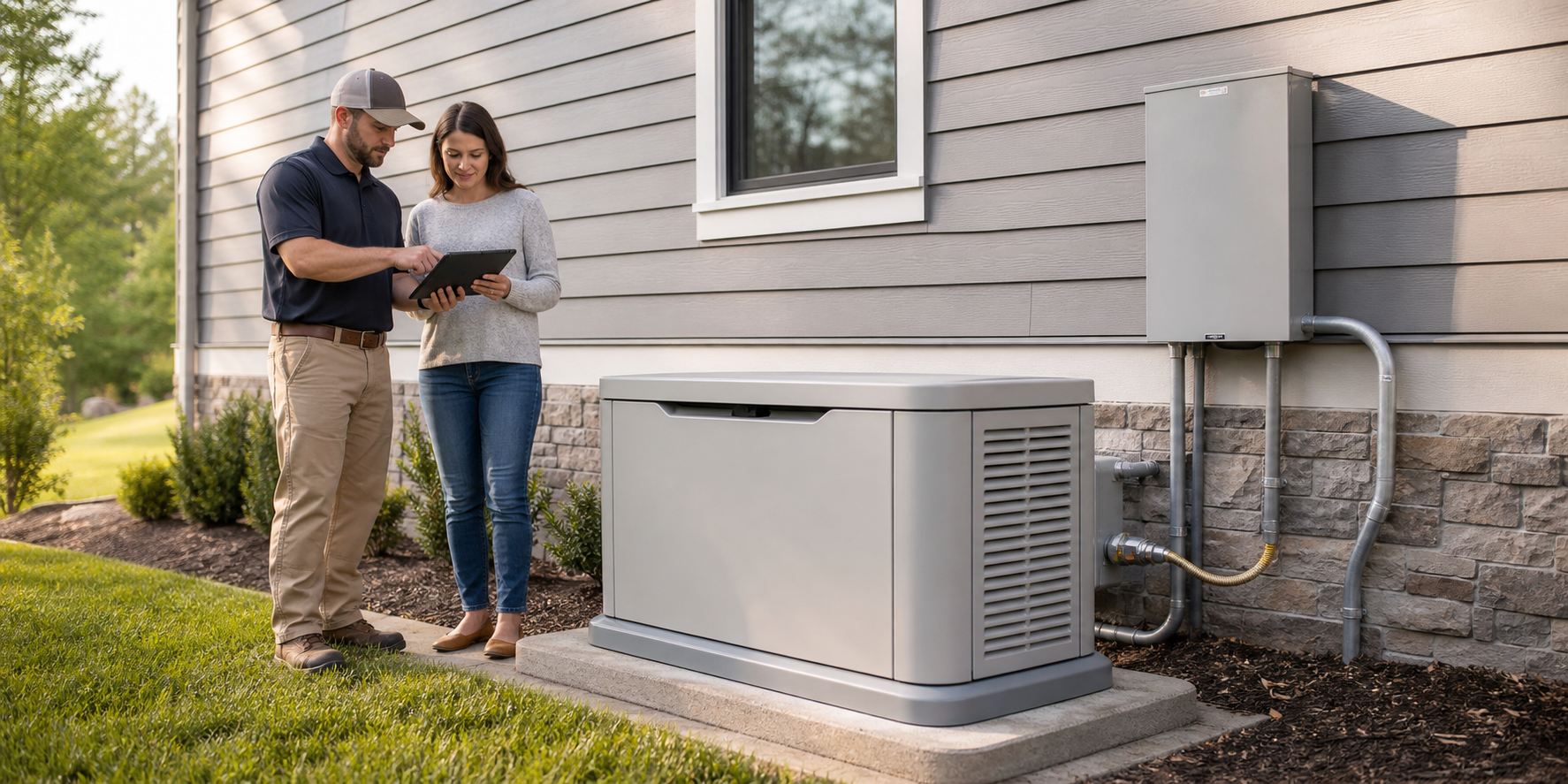
The generator is only one part of an installed standby-power project. A complete proposal must connect the property’s outage priorities with verified electrical loads, transfer equipment, fuel capacity, placement, delivery, site preparation, permits, inspections, startup, testing, and long-term service.
Generac’s current public installation guide, checked August 23, 2026, states that U.S. home-standby projects commonly range from $8,000 to $16,000 including the generator, system equipment, materials, and installation. That manufacturer range is broad market context—not an HHM quote, minimum, maximum, allowance, eligibility statement, or promise that a particular property fits within it. Generac also states that project cost varies with installation complexity and location.
Begin with the required outage outcomes
The responsible professional identifies the loads that must operate, which loads may run together, motor-starting demand, available load management, electrical-service conditions, and future needs. Home size or a requested kilowatt rating does not establish the final system. A different load strategy can change the generator, transfer equipment, controls, fuel demand, conductor work, and project cost.
Identify the exact equipment package
The proposal should identify the generator model and revision, fuel basis, transfer-switch configuration, approved load-management components, battery, monitoring items, cold-weather or site accessories, pad or foundation, and other required equipment. Manufacturer starting prices and retail product cards do not include every property-specific installation component.
As a Generac Alliance Partner, HHM can evaluate current Generac equipment inside a site-reviewed installed project. Final selection, availability, price, and scope are established only after HHM and the responsible qualified parties verify the property and current product documentation.
Measure electrical and transfer-system scope
Existing service equipment, panel arrangement, transfer location, service rating, conductor routes, grounding and bonding, required interruption, utility coordination, surge or load-management equipment, and correction of deficient existing work can materially change the proposal. The responsible qualified electrical party determines and performs this work under the required permits, inspections, utility rules, and approved documents.
Verify fuel capacity and routing
Natural gas and liquid propane projects can require different meters, regulators, tanks, piping, trenching, pressure verification, supplier coordination, and operating assumptions. An existing gas appliance or tank does not prove that the supply can support the proposed generator. The responsible fuel supplier and qualified fuel-gas or LP party establish the approved capacity and scope.
Evaluate placement and site preparation
Placement must respond to the selected equipment, property boundaries, openings, ignition sources, exhaust, airflow, service access, drainage, flood conditions, noise, utilities, combustible construction, fire access, association restrictions, and current authority requirements. Longer electrical or fuel routes, difficult access, excavation, rock, retaining work, lifting equipment, flood elevation, restoration, or specialty foundations can change cost.
Include permits, utilities, testing, and closeout
A complete proposal identifies design and trade responsibilities, permits, utility or supplier coordination, inspections, delivery, freight inspection, equipment protection, startup, outage simulation, activation or registration, owner orientation, cleanup, manuals, warranty records, and the maintenance path. A product-only price does not cover those responsibilities.
Read allowances, exclusions, and change conditions
Ask which quantities and routes were measured, which equipment and documents are current, which conditions remain unverified, what the standard scope includes, and what would require a written change. Common open items can involve utility upgrades, meter or regulator work, tanks, trenching, existing defects, engineering, floodplain conditions, association approval, landscaping or hardscape restoration, hazardous materials, and concealed utilities.
Compare financing only after the scope is visible
A monthly-payment example can depend on the amount financed, term, rate, fees, credit approval, lender conditions, and the exact project. Compare the complete written cash price, financed amount, payment schedule, annual percentage rate, total of payments, cancellation terms, and technical scope. HHM is not the lender and does not make credit decisions.