
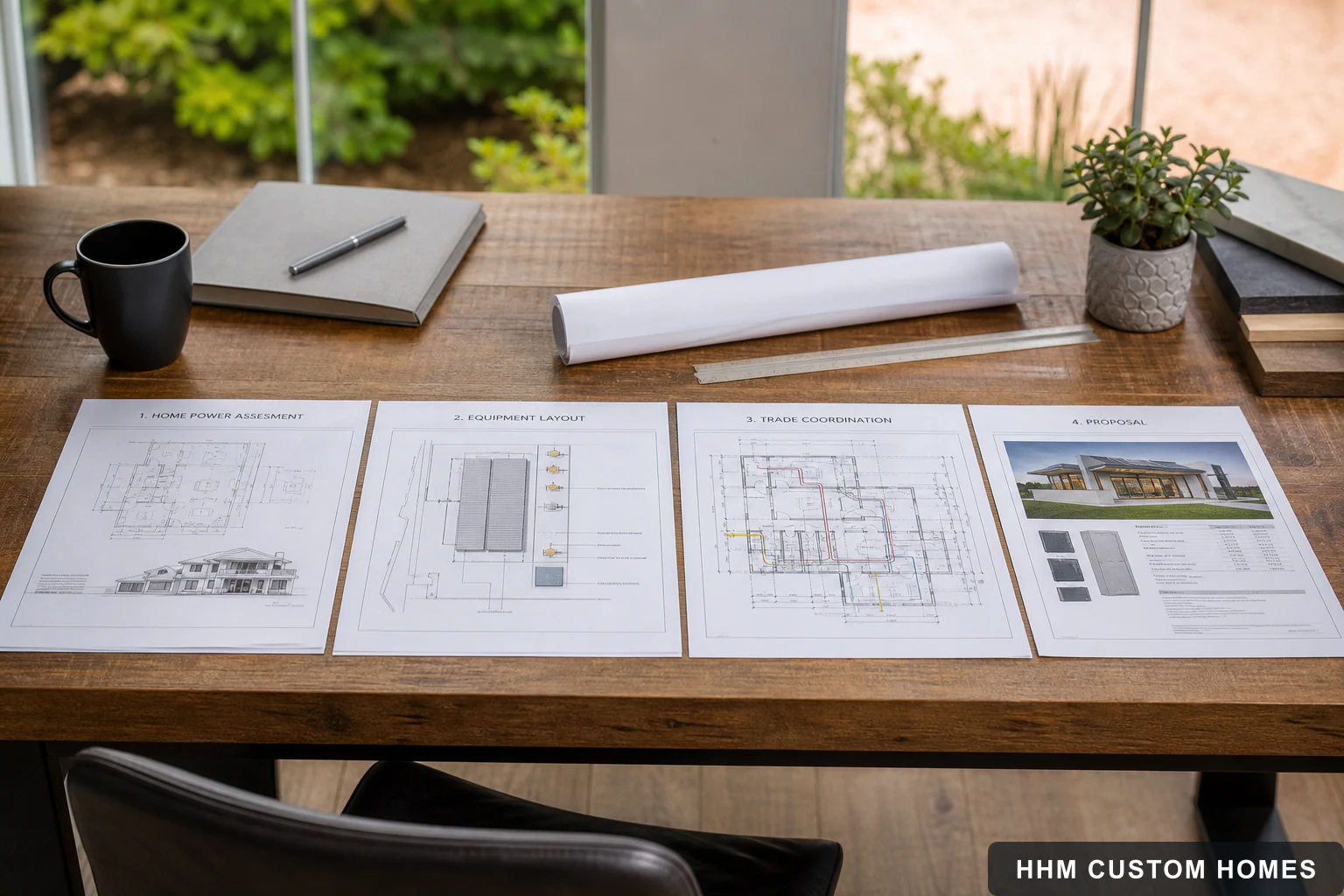
A useful standby-power proposal begins with the property and the owner’s outage priorities—not with a checkout button. HHM first organizes the information needed to decide whether a project can be responsibly evaluated for a North Carolina or South Carolina address.
Use the HHM standby-power consultation checklist to gather the property records, outage priorities, utility information, photographs, and questions needed before site review.
Before acceptance, compare the address-specific scope against the installed standby-generator proposal checklist so equipment, responsible trades, site assumptions, delivery, price treatment, testing, warranties, and closeout remain aligned.
This process overview is not a load calculation, electrical or fuel design, permit determination, installation instruction, product recommendation, or price quote. Those conclusions require the responsible qualified parties and current project records.
1. Record the outage goals
The consultation should capture which household functions matter during an outage, whether any medical or life-safety concerns require separate planning, how long outages commonly last, and which equipment the owner expects to operate. HHM uses this information to organize the next review; the owner’s wish list is not itself an approved system design.
2. Confirm the address and existing conditions
HHM needs the project address, utility and fuel information, available property records, electrical-service information, photographs, access constraints, and the proposed areas that may require evaluation. Conditions involving drainage, flood exposure, utilities, structures, property restrictions, noise, or neighboring features should be documented early rather than treated as assumptions.
3. Identify responsible reviews
The project record should state who will assess loads, electrical conditions, fuel capacity, placement, permitting, delivery, startup, and other regulated work. Generac Alliance Partner status supports HHM’s stated product and project-coordination role; it does not replace state or local trade qualifications.
4. Build an address-specific scope
The written scope should distinguish the exact equipment, transfer components, ordinary delivery and placement assumptions, mounting basis, electrical work, fuel work, permits, inspections, startup, testing, orientation, restoration, and closeout. It should also identify exclusions, allowances, access limits, customer responsibilities, and the process for concealed or changed conditions.
5. Reconcile price and acceptance
A manufacturer MSRP is not an installed-project price. HHM must reconcile current equipment cost, the approved scope, delivery, labor, permits, access, taxes or fees, and contingencies that belong in the proposal. Financing is separate, subject to provider approval, and does not replace the signed project agreement.
Procurement and scheduling should begin only after the proposal identifies the controlling scope, price, payment treatment, responsible parties, and acceptance requirements.
Move from planning to an HHM installed system
HHM connects the site visit, licensed trade review, equipment planning, installed scope, and proposal so your standby-power project moves forward through one coordinated team.