
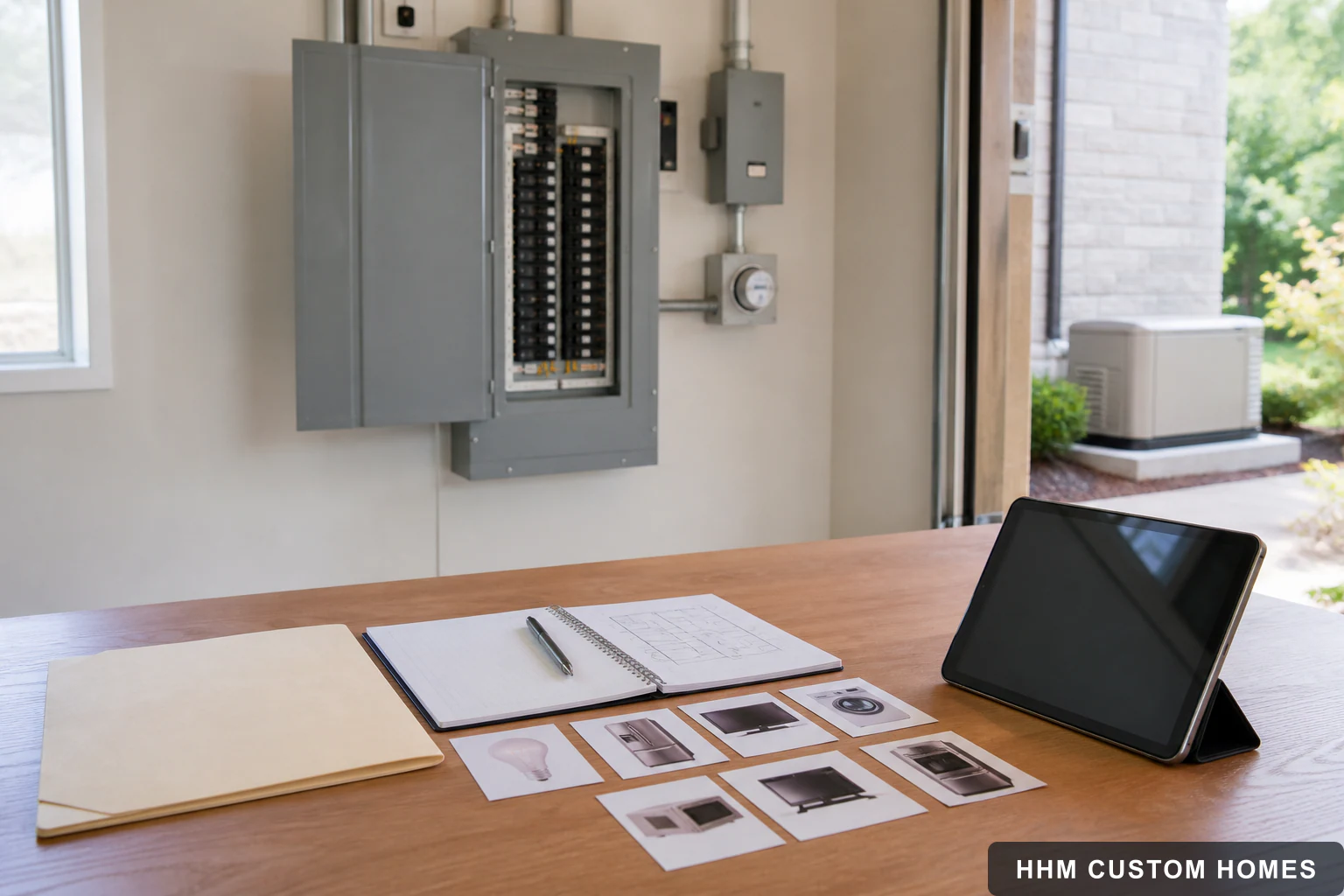
A standby-power consultation is more productive when HHM can connect the owner’s outage priorities to the actual property. You do not need to diagnose the electrical or fuel system yourself. The goal is to assemble reliable information for the people responsible for the project-specific reviews.
See how an HHM standby-power project moves from consultation to proposal so you understand how the collected property information becomes an address-specific scope and review process.
This checklist is general preparation, not a design, inspection, permit determination, installation instruction, product recommendation, or promise that a property or model is eligible.
Property and contact information
- Project address and the best contact for site access
- Property type, occupancy, and any known ownership or association restrictions
- Available survey, site plan, permit history, or utility records
- Known flood, drainage, easement, access, or neighbor concerns
Outage priorities
List the functions the household wants to preserve, such as refrigeration, water, heating or cooling, communications, security, lighting, garage access, home-office needs, or other equipment. Note which priorities are essential and which are optional. Tell HHM about medical or life-safety concerns, but maintain an appropriate independent emergency plan; a proposed generator project is not emergency-response coverage.
Utility and equipment records
Gather recent utility information, the known fuel source, photographs of the electrical service and relevant equipment labels, and any records for existing generators, transfer equipment, solar, batteries, wells, pumps, HVAC equipment, or major loads. Do not remove covers, enter unsafe spaces, handle energized equipment, or perform tests for the consultation.
Site photographs and access
Provide ordinary photographs of the building exterior, utility areas, possible access routes, gates, driveways, slopes, retaining features, drainage patterns, and locations the owner wants evaluated. Photographs help HHM organize questions but do not replace field verification, measurements, utility locating, or professional review.
Decision and proposal questions
Ask what equipment is included, which loads or outcomes the proposed system addresses, who performs each regulated trade, who handles permits and inspections, how delivery and placement are treated, what site work is excluded, when availability is reconfirmed, and how changes are approved. The proposal should also explain payment milestones, financing treatment, warranty responsibilities, startup, testing, orientation, maintenance expectations, and closeout records.
When written scopes are available, use the installed standby-generator proposal comparison to review equipment, site work, regulated trades, permits, exclusions, commercial terms, testing, orientation, and closeout on the same basis.
Keep private information protected
Do not place passwords, complete payment information, account credentials, medical records, or unrelated personal documents in general project comments. Use the approved HHM channel for information that is actually required and restrict access to the people who need it.
Ready for an HHM standby-power plan?
HHM will use these details to organize the site visit, system review, installed scope, and proposal around your property and priorities.